
Penn Vet’s Nicola J. Mason Elected to the National Academy of Medicine

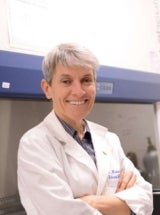
Nicola “Nicky” J. Mason, BVetMed, PhD, DACVIM (internal medicine), FRCVS, the Paul A. James and Charles A. Gilmore Endowed Chair Professor and professor of medicine and pathobiology at the University of Pennsylvania School of Veterinary Medicine (Penn Vet), has been elected to the National Academy of Medicine (NAM). Election to the NAM is considered one of the highest honors in the fields of health and medicine.
The NAM announced the election of 90 regular members and 10 international members during its annual meeting. Mason was recognized for her comparative research within the One Health initiative, which has drawn on pet dogs with naturally occurring diseases to inform human treatments. Her clinical and translational work with client-owned canine patients has involved vaccines, cellular and gene therapies, and monoclonal antibodies, leading to therapeutic advances in both veterinary and human medicine. She is one of seven Penn faculty appointed as new members, bringing the University’s membership to 124.
Mason leads the NIH/NCI-supported Pre-medical Cancer Immunotherapy Network for Canine Trials, comprising veterinary and medical clinician-scientists who conduct clinical trials in dogs with naturally occurring cancers to accelerate the development of new immunotherapies and identify correlative biomarkers of response, informing both human and canine drug development. In 2017, Mason co-founded Vetigenics, a biotech company that develops antibodies and antibody-targeted approaches for pets with cancer and other chronic diseases. Together with Vetigenics, she has brought two canine checkpoint inhibitors into the veterinary clinic and has multiple other antibody-based therapeutics in development for inflammatory and allergic indications. In 2024, she launched the Comparative Immunotherapy Program at Penn Vet, which bridges human and veterinary medicine to advance the most promising immunotherapies to benefit both species.
NAM members are elected by current members through a process that recognizes individuals who have made major contributions to the advancement of the medical sciences, health care, and public health. Established in 1970 as the Institute of Medicine by the National Academy of Sciences, the NAM addresses critical issues in health, science, medicine, and related policy and inspires positive action across sectors. “I am thrilled to welcome these outstanding health and medicine leaders into the National Academy of Medicine,” said NAM President Monica M. Bertagnolli. “Their extraordinary talent and commitment to advancing evidence-based guidance and solutions for our country’s greatest health care challenges will strengthen our efforts to improve health for all.”
Related News

Ryan Critical Care Team Gives a Rescue Puppy a Second Chance at a Well-Loved Life
Faculty In This Story Murphy Moore is one lucky dog – and a much-loved one, at that. But about a year ago, it looked like this sunny yellow Lab mix would have a…

Matthew Atherton Receives 2026 Zoetis Award for Veterinary Research Excellence at Annual Research Retreat
Atherton is engineering canine T cells to fight cancer, and his first clinical trial is nearly ready.

Penn Vet’s Institute for Infectious and Zoonotic Diseases Announces 2026 Fellows
Record pool yields six fellows.
About Penn Vet
Ranked among the top ten veterinary schools worldwide, the University of Pennsylvania School of Veterinary Medicine (Penn Vet) is a global leader in veterinary education, research, and clinical care. Founded in 1884, Penn Vet is the first veterinary school developed in association with a medical school. The school is a proud member of the One Health initiative, linking human, animal, and environmental health.
Penn Vet serves a diverse population of animals at its two campuses, which include extensive diagnostic and research laboratories. Ryan Hospital in Philadelphia provides care for dogs, cats, and other domestic/companion animals, handling more than 30,000 patient visits a year. New Bolton Center, Penn Vet’s large-animal hospital on nearly 700 acres in rural Kennett Square, PA, cares for horses and livestock/farm animals. The hospital handles more than 6,300 patient visits a year, while our Field Services have gone out on more than 5,500 farm service calls, treating some 22,400 patients at local farms. In addition, New Bolton Center’s campus includes a swine center, working dairy, and poultry unit that provide valuable research for the agriculture industry.