
Equine Behaviorist at the University of Pennsylvania’s School of Veterinary Medicine Honored with Prestigious National Impact Award

Recognition a testament to Dr. Sue McDonnell’s contributions to equine education
The National Association of Equine Affiliated Academics (NAEAA) has named Sue McDonnell, PhD, adjunct professor of Reproduction and Behavior and head of the Equine Behavior Program at the University of Pennsylvania’s School of Veterinary Medicine (Penn Vet) this year’s recipient of the 2024 Don Henneke Educational Impact Award.
The Don Henneke Award recognizes individuals who have had a sustained, industry-wide, national and/or international impact on education or educational practices within the equine industry. McDonnell was selected for her substantial body of research and knowledge on equine behavior that has advanced the understanding and application of evidence-based practices within the horse sector.
“We are incredibly proud of Dr. McDonnell’s achievements,” said Katrin Hinrichs, DVM, PhD, DACT, Harry Werner Endowed Professor of Equine Medicine and chair of the Department of Clinical Studies at Penn Vet’s New Bolton Center. “This award acknowledges the far-reaching impact of Dr. McDonnell’s work. Sue’s scholarly contributions have not only advanced our understanding of equine behavior and welfare; but have informed a generation of veterinary and animal behavior students, equine veterinarians, government entities, and equine-affiliated professionals.”
McDonnell completed her post-doctoral study in clinical veterinary reproduction at Penn Vet’s New Bolton Center in 1987, and in 1991 became a Certified Applied Animal Behaviorist (CAAB). She is the founder of Penn Vet’s Equine Behavior Program and head of the Havemeyer Equine Behavior Research Laboratory.
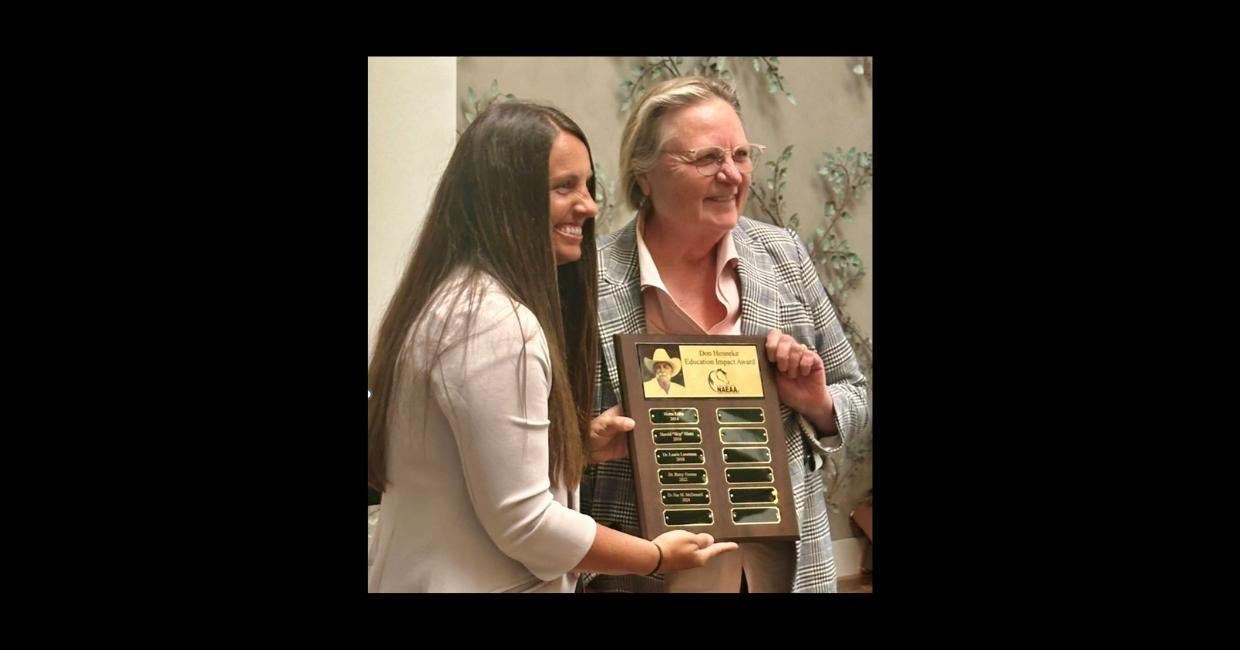
“I want to extend my sincere thanks to the National Association of Equine Affiliated Academics for bestowing me with the Don Henneke Educational Impact Award,” said McDonnell. “This honor extends beyond me; it recognizes the dedication and hard work of our entire academic community and reinforces Penn Vet’s commitment to excellence in veterinary education, and equine education.”
The NAEAA presented the award to McDonnell at a luncheon held on May 31st at New Bolton Center during the NAEAA’s annual conference. This year’s theme, “Innovations in Experiential Education: Integrating Science with Practice in Undergraduate Equine Programs” brought together equine educators and industry representatives from across the country.
Related News

A New Study from Penn Vet Reveals an Unsung Immune Defender as a Key Guardian of Gut Health and Metabolism
A pioneering new study published in Nature Microbiology, led by Oriol Sunyer, PhD, and a team of researchers at Penn Vet and the University of New Mexico, have uncovered a…
Emmie’s Complex Case Takes Curiosity, Collaboration, and Care
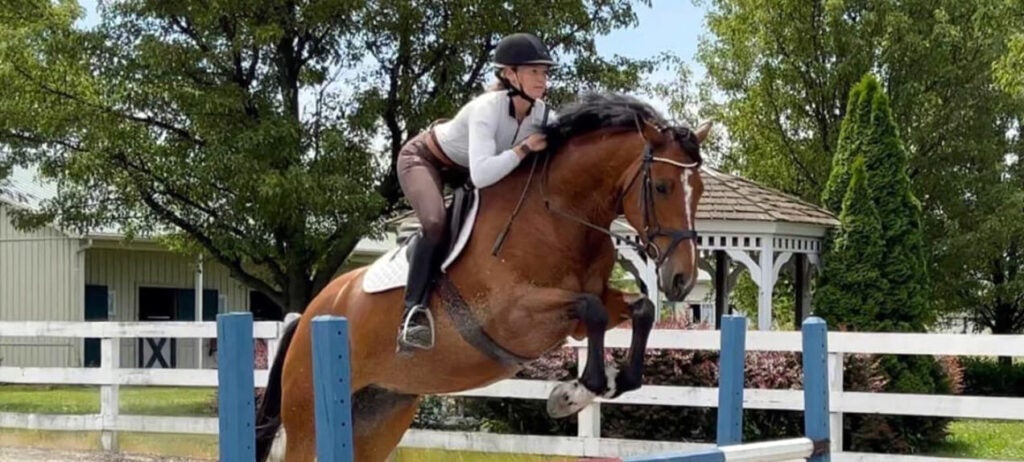
A warmblood named Emmie receives a layered, individualized treatment plan at New Bolton Center for her complex health issues.
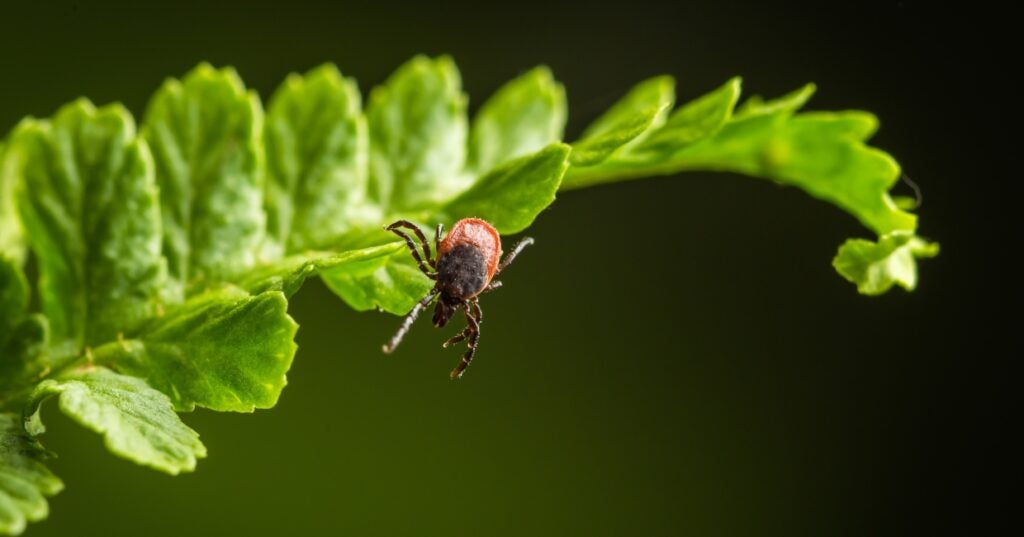
A Pennsylvania study of deer and ticks at the University of Pennsylvania School of Veterinary Medicine could shape public health and safety across the Commonwealth
Researchers at the University of Pennsylvania’s School of Veterinary Medicine (Penn Vet), in collaboration with the Pennsylvania Game Commission, are studying the complex interactions between ticks, pathogens, hosts, and their…
About Penn Vet
Ranked among the top ten veterinary schools worldwide, the University of Pennsylvania School of Veterinary Medicine (Penn Vet) is a global leader in veterinary education, research, and clinical care. Founded in 1884, Penn Vet is the first veterinary school developed in association with a medical school. The school is a proud member of the One Health initiative, linking human, animal, and environmental health.
Penn Vet serves a diverse population of animals at its two campuses, which include extensive diagnostic and research laboratories. Ryan Hospital in Philadelphia provides care for dogs, cats, and other domestic/companion animals, handling more than 34,600 patient visits a year. New Bolton Center, Penn Vet’s large-animal hospital on nearly 700 acres in rural Kennett Square, PA, cares for horses and livestock/farm animals. The hospital handles more than 6,200 patient visits a year, while our Field Services have gone out on more than 5,500 farm service calls, treating some 18,700 patients at local farms. In addition, New Bolton Center’s campus includes a swine center, working dairy, and poultry unit that provide valuable research for the agriculture industry.