
Research Area
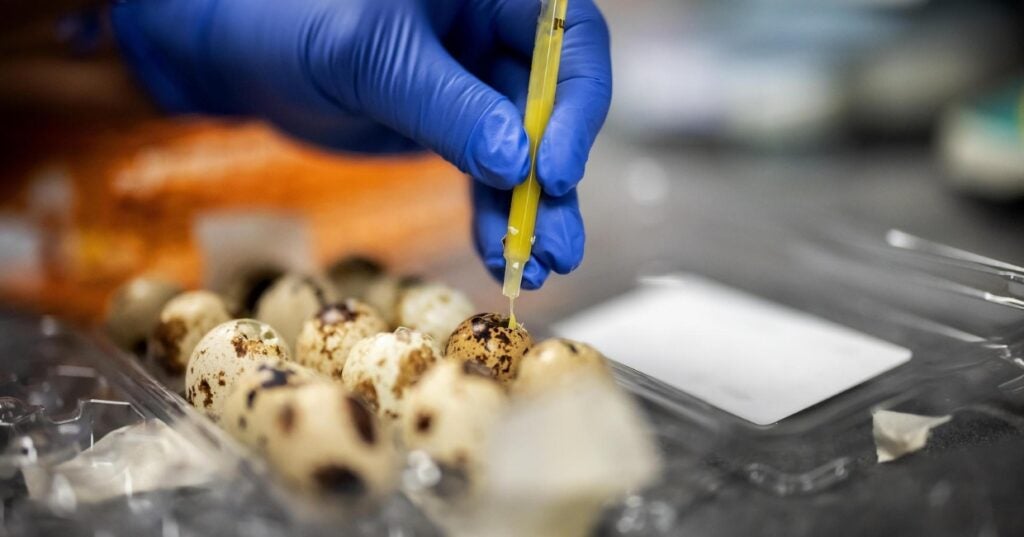
Keeping food safe and animals healthy (link is external)
A strain of the H5N1 virus—best known for causing avian influenza—was detected in U.S. dairy cattle for the first time in March 2024. It has since spread to more than…
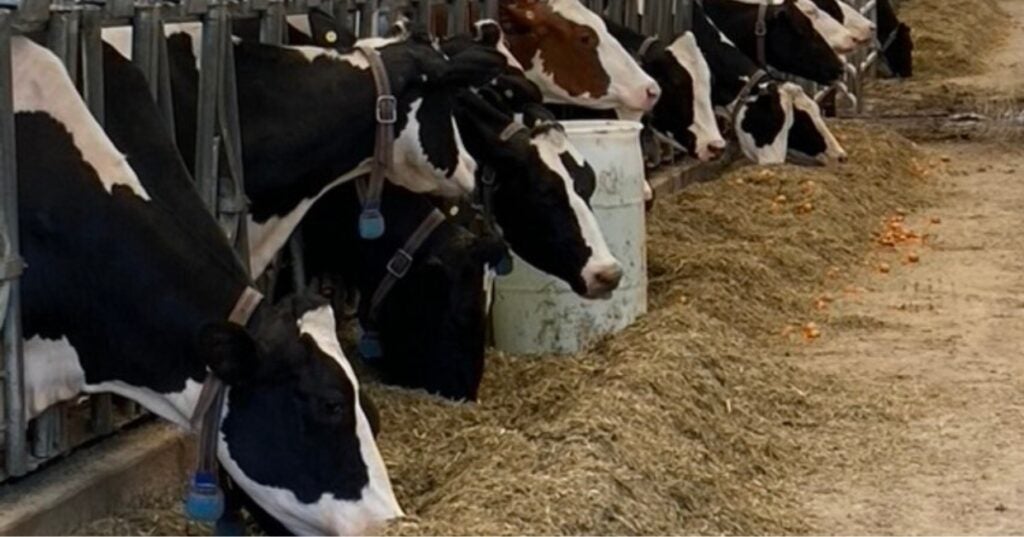
Food waste: Recycling, not discarding, offers huge environmental benefits (link is external)
Researchers at Penn Vet examine how common food waste recycling methods, including composting, could have a big impact on greenhouse gas emissions and the use of natural resources.

Improving T-cell responses to vaccines (link is external)
Penn Vet and Penn Medicine researchers have modified mRNA vaccines to include the cytokine IL-12 and improve T-cell responses which could improve the body’s ability to fight infections.

New tools to treat retinal degenerations at advanced stages of disease (link is external)
A collaborative team of researchers led by vision scientists at the School of Veterinary Medicine have developed novel promoters that drive strong and specific gene expression in rod and cone…
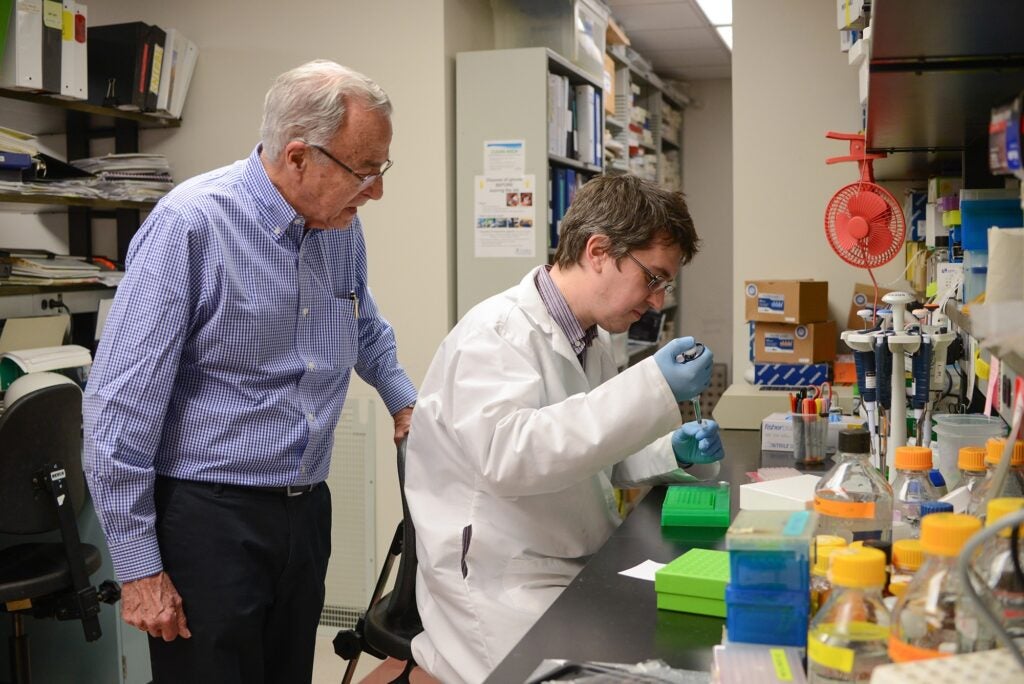
New genetic cause of blindness in dogs (link is external)
In collaboration with a foundation that breeds service dogs for the visually impaired, researchers at the School of Veterinary Medicine at the University of Pennsylvania and the University of Padova…

How Penn is helping with bird flu research and disease surveillance (link is external)
Faculty are working on a new vaccine for the H5N1 virus, studying its transmission, and helping the state test samples from birds and mammals.

Identifying a proliferating repairman for tissue in damaged lungs (link is external)
Penn Vet and Penn Medicine researchers found that endothelial cells lining the veins in lungs contribute to repair of blood vessels after lung injury.
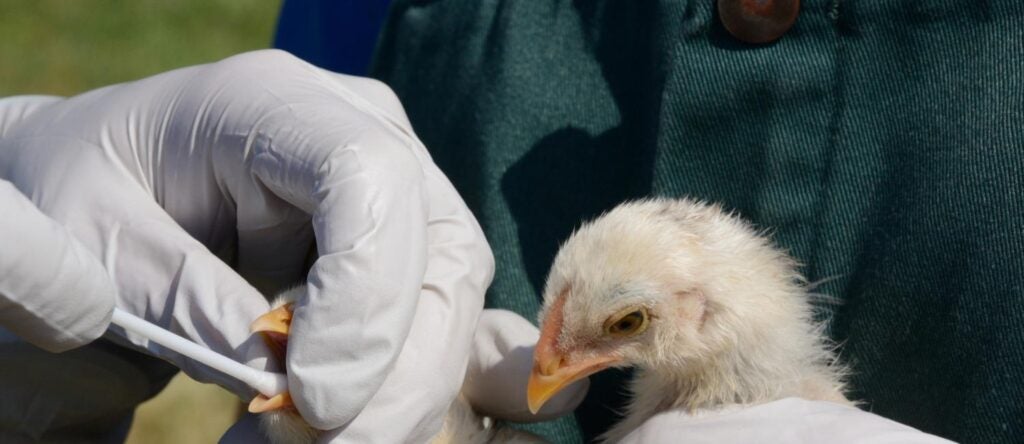
What to know about the current avian influenza outbreak (link is external)
Louise Moncla and Aliza Simeone of Penn Vet and Kathleen Hall Jamieson of the Annenberg Public Policy Center share helpful information for the public.
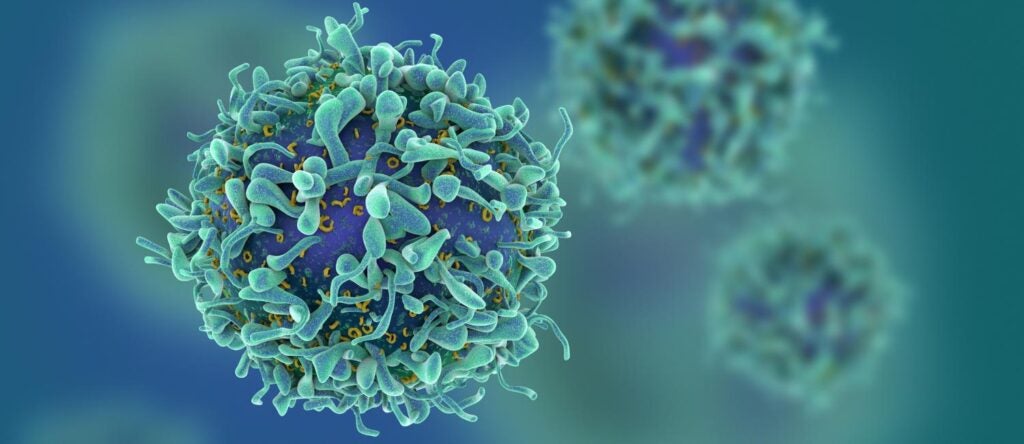
Uncovering a way for pro-B cells to change trajectory (link is external)
Researchers from the School of Veterinary Medicine and Perelman School of Medicine have found that YY1 knockout pro-B cells can generate T lineage cells helping B cells produce antibodies.
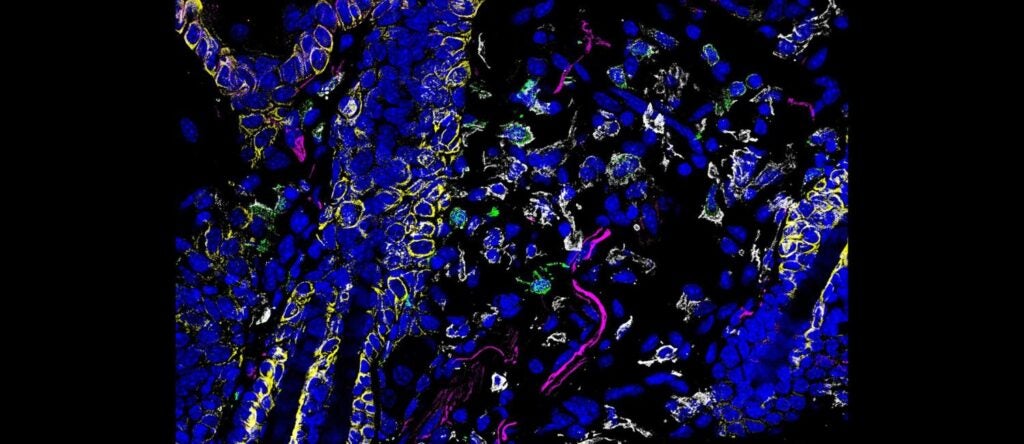
Scientific discovery scratching beneath the surface of itchiness (link is external)
A collaborative study led by researchers from Penn Vet provides insights into how a species of worms found a way to evade the mammalian urge to scratch an itch.
Sort By
- Research Laboratories (1)
- ASMG Laboratory - Microbial Genomics (2)
- Lengner Laboratory (2)
- New Bolton Center PADLS (1)
- Anguera Laboratory (4)
- Wang Laboratory (3)
- Puré Laboratory (1)
- Wolfe Laboratory (1)
- Lennon Mucosal Immunology Laboratory (1)
- Dou Laboratory (2)
- Equine Pharmacology Research Laboratory (1)
- Hunter Laboratory (3)
- Brinster Laboratory of Reproductive Physiology (1)
- Sunyer Laboratory (1)
- Harty Laboratory (3)
- Mason Immunotherapy Research Laboratory (2)
- Scott Laboratory (1)
- Vaughan Laboratory (1)
- Research Institutes (5)
- Research Programs (1)
- Research Centers (2)