
Research Area

Uncovering the role of skin microbiome and immune response in cutaneous leishmaniasis (link is external)
Two new studies led by Phillip Scott of the School of Veterinary Medicine and Elizabeth Grice of the Perelman School of Medicine demonstrate how bacteria found in leishmaniasis skin lesions…

Study shows promise for iNKT cell platform to treat cancer (link is external)
Researchers from the School of Veterinary Medicine and Perelman School of Medicine have shown that invariant natural killer T cells from a healthy donor can persist in MHC-mismatched canines, demonstrating…

Social ecology and community work in the Galápagos (link is external)
Daniel Beiting, PhD, associate director of the Institute for Infectious and Zoonotic Diseases, expanded his work this summer in the Galápagos, giving Stephanie Sila, V’25, an ideal opportunity to gain…

Harnessing an innate protection against Ebola (link is external)
In their evolutionary battle for survival, viruses have developed strategies to spark and perpetuate infection. Once inside a host cell, the Ebola virus, for example, hijacks molecular pathways to replicate…

People and places at Penn: Research (link is external)
From Charles Addams Fine Arts Hall to the Schuylkill River, four researchers share their science and their spaces, including Penn Vet’s Roderick Gagne, assistant professor of wildlife disease ecology.

Penn Vet’s Dr. Nicola “Nicky” Mason Appears on 60 Minutes
The interview highlighted Dr. Mason’s role in leading clinical trials that evaluated a novel Listeria-based vaccine to treat pet dogs with osteosarcoma, a common canine bone cancer.

Igor Brodsky, PhD, Named Inaugural Robert R. Marshak Professor at the University of Pennsylvania’s School of Veterinary Medicine
Dean Andrew M. Hoffman has named Dr. Igor Brodsky, an internationally recognized microbiologist, the inaugural Robert R. Marshak Professor.
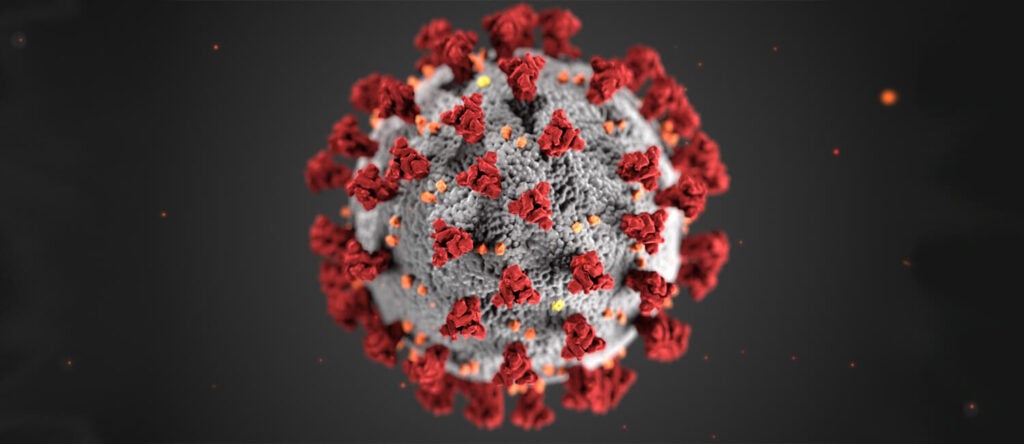
The University of Pennsylvania’s School of Veterinary Medicine Announces Infectious and Zoonotic Disease Pilot Awards
Awards represent the Institute for Infectious and Zoonotic Diseases’ long-term vision of supporting research that advances understanding of infectious diseases.
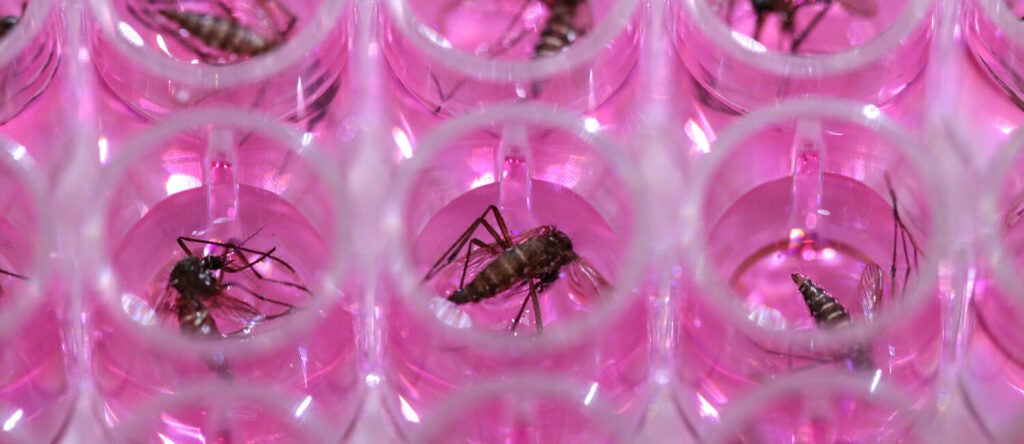
Stopping Disease Transmission at the Source
Dr. Michael Povelones considers how the chain of disease transmission could be halted before a pathogen ever leaves the mosquito vector.

Penn Vet Establishes Institute for Infectious and Zoonotic Diseases
Signaling the world’s vulnerability to disease, Penn Vet is launching the Institute for Infectious and Zoonotic Diseases to confront emerging and re-emerging zoonotic and vector-borne diseases, with a goal of…