
Research Area

Genetic switch turns tumor suppressor into oncogene in colorectal cancer (link is external)
Researchers from the School of Veterinary Medicine have shown that an enzyme that suppresses early-stage colorectal cancer switches to become an oncogene as the cancer progresses.
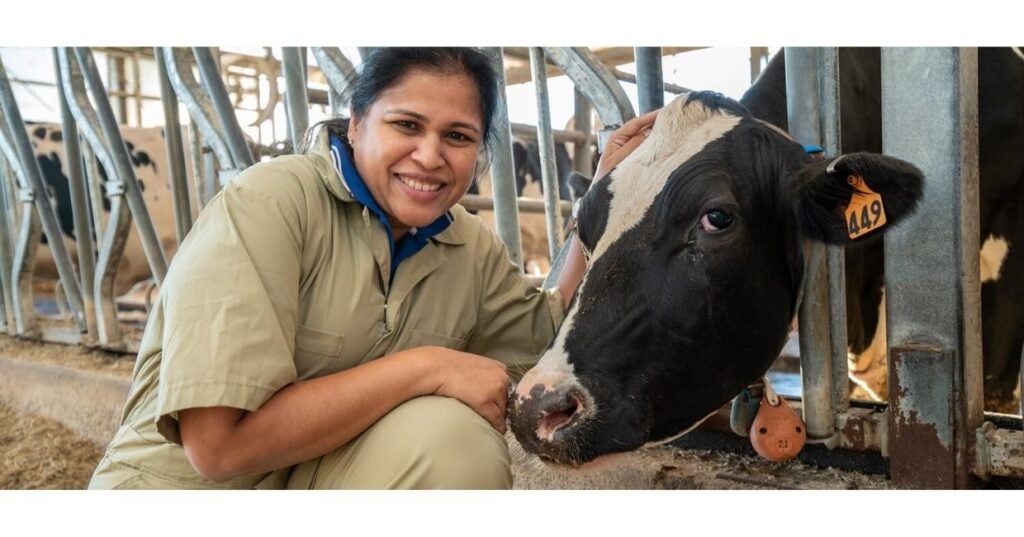
Could we breed cows that emit less methane? (link is external)
In a new study, researchers from the School of Veterinary Medicine identified attributes of low-methane-emitting dairy cows that could be used as targets for selective breeding.
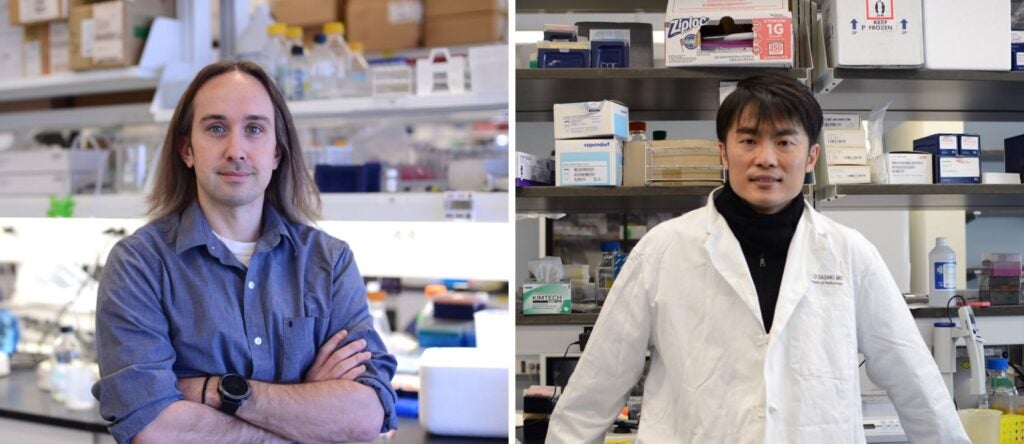
Two Early-Career Investigators from the University of Pennsylvania’s School of Veterinary Medicine Recognized for Advancing Biomedical Research
June 20, 2023; PHILADELPHIA, PA – Two early-career scientists from the Department of Biomedical Sciences at the University of Pennsylvania’s School of Veterinary Medicine (Penn Vet) have been honored with…

Harnessing an innate protection against Ebola (link is external)
In their evolutionary battle for survival, viruses have developed strategies to spark and perpetuate infection. Once inside a host cell, the Ebola virus, for example, hijacks molecular pathways to replicate…
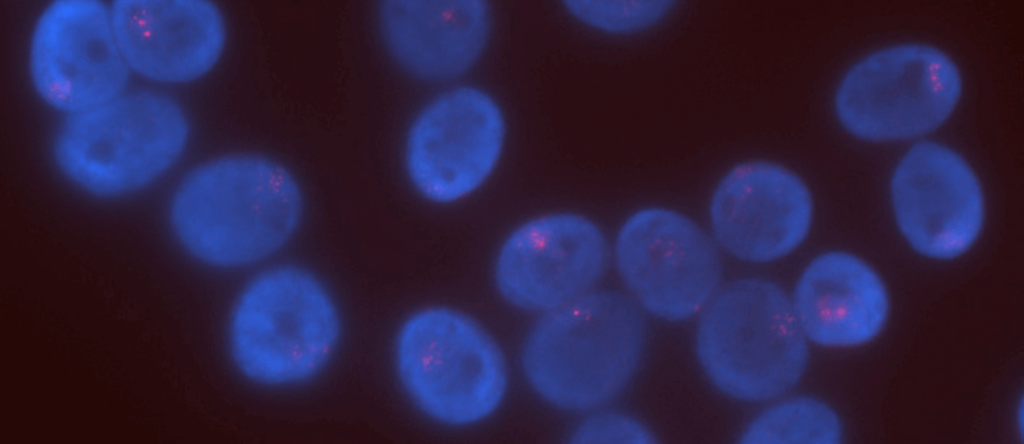
How sex differences may influence lung injury (link is external)
Comparing lung cells from male and female mice, Penn Vet scientists found gene expression differences that may explain why older males are at a higher risk than females for worse…

Penn Vet’s Dr. Nicola “Nicky” Mason Appears on 60 Minutes
The interview highlighted Dr. Mason’s role in leading clinical trials that evaluated a novel Listeria-based vaccine to treat pet dogs with osteosarcoma, a common canine bone cancer.

NIH-funded canine immunotherapy data center charts a path toward transformative therapies (link is external)
With support recently for five more years, Nicola Mason of the School of Veterinary Medicine and Qi Long of the Perelman School of Medicine hope their work leads to new…
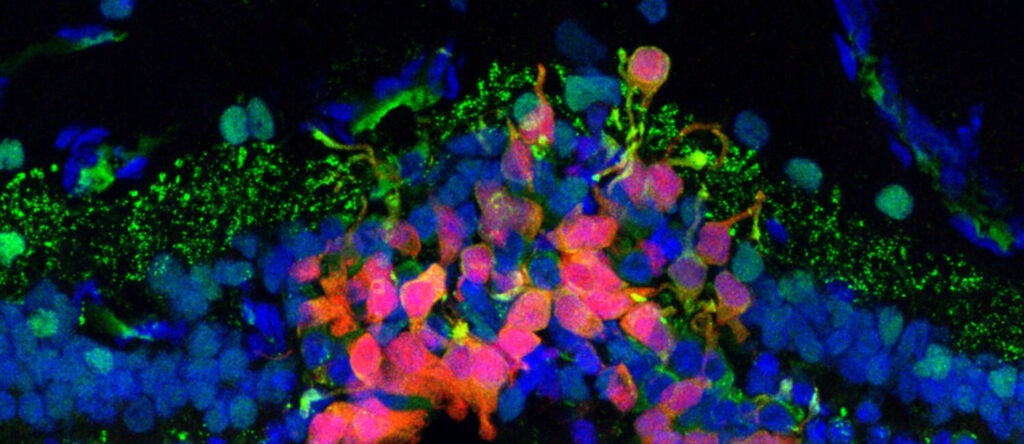
Progress toward a stem cell–based therapy for blindness (link is external)
A multi-institutional effort led by researchers at Penn Vet is taking steps to develop an effective technique to regenerate photoreceptors cells and restore sight in people with vision disorders.
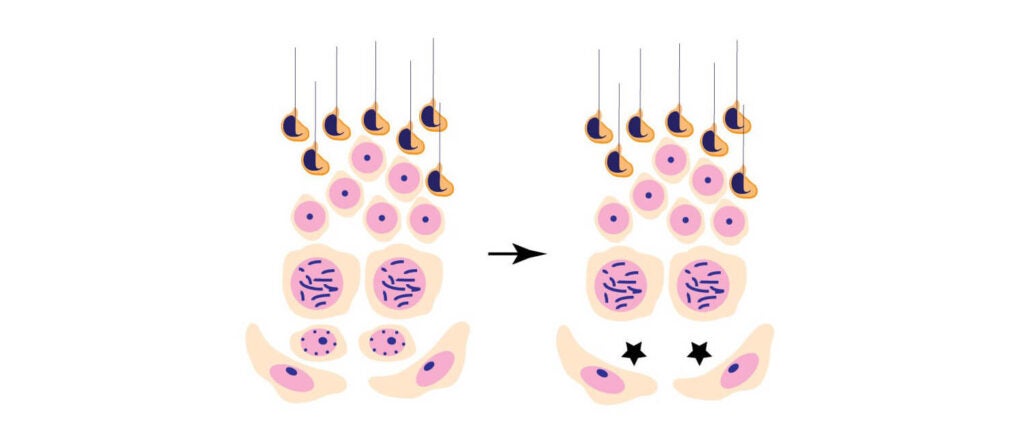
A newly identified stem cell regulator enables lifelong sperm production (link is external)
Research led by Dr. Jeremy Wang has discovered that the enzyme DOT1L, a stem cell renewal factor, is essential for mice to produce sperm throughout their adult lives.
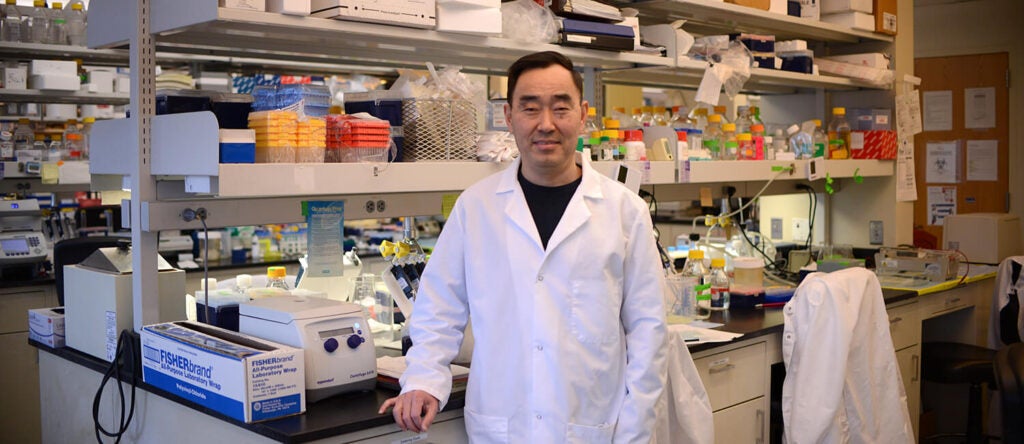
P. Jeremy Wang, MD, PhD, Named Ralph L. Brinster President’s Distinguished Professor at Penn Vet
The awarding of a named, endowed professorship is the highest honor bestowed upon a faculty member at the University of Pennsylvania and reflects a commitment to scientific discovery, mentorship, and…
Sort By
- Research Laboratories (1)
- ASMG Laboratory - Microbial Genomics (2)
- Lengner Laboratory (3)
- New Bolton Center PADLS (3)
- Anguera Laboratory (4)
- Wang Laboratory (5)
- Puré Laboratory (1)
- Ortved Orthopedic Regenerative Medicine Laboratory (4)
- Wolfe Laboratory (1)
- Dou Laboratory (3)
- Lennon Mucosal Immunology Laboratory (1)
- Brinster Laboratory of Reproductive Physiology (2)
- Equine Pharmacology Research Laboratory (5)
- Hunter Laboratory (4)
- Sunyer Laboratory (3)
- Harty Laboratory (3)
- Mason Immunotherapy Research Laboratory (3)
- Sylvia M. Van Sloun Laboratory (1)
- Scott Laboratory (1)
- Sasaki Laboratory (1)
- Vaughan Laboratory (1)
- Modzelewski Laboratory (1)
- Research Institutes (14)
- Research Programs (1)
- Research Centers (1)
- Research Cores (2)