
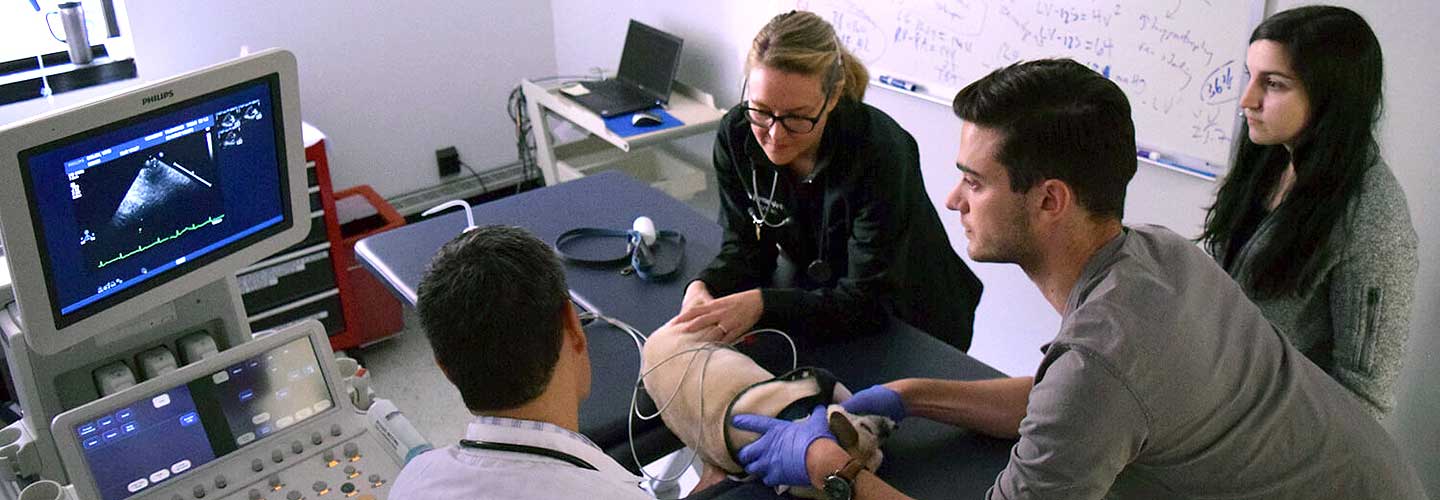
Department of Clinical Sciences & Advanced Medicine
The Department of Clinical Sciences & Advanced Medicine plays a vital role in Penn Vet’s three-part mission to educate veterinarians and the public about animal health, provide service to the public by treating sick pets and other small animals, and develop new approaches through research to improve companion animal health.
Expertise and Services
Teaching
Fourth-year students rotate through busy clinics staffed by Board-certified specialists in internal medicine, surgery, dermatology, special species, critical care, anesthesia, dentistry, radiology, neurology, cardiology, and oncology. The department also trains graduate veterinarians to become specialists and provides continuing education to veterinarians and the public through programs, seminars, and publications.
Services
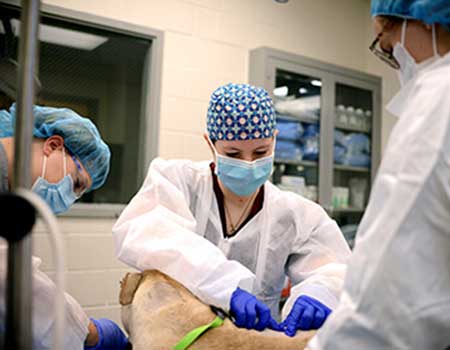
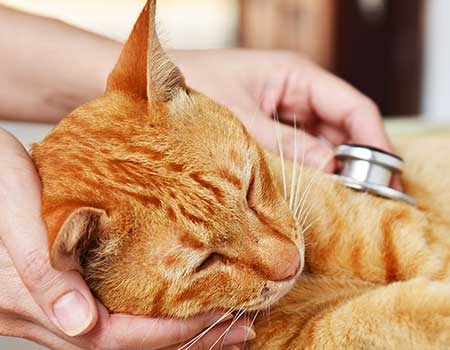
The Matthew J. Ryan Veterinary Hospital is staffed by department faculty and staff, who see more than 34,000 patients per year.
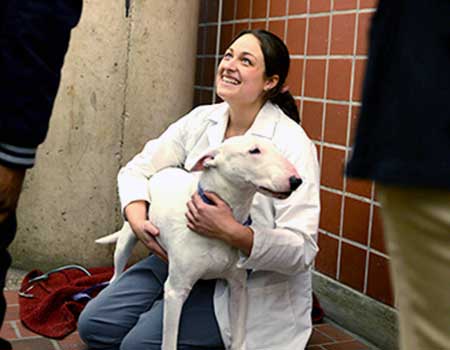
The Ryan Veterinary Hospital is an established world leader in programs such as advanced urinary care, behavior medicine, cardiology, oncology, critical care, internal medicine and surgery.
Many veterinary specialties now practiced internationally were initiated at Penn Vet. Innovative new programs for treating companion animal patients at the hospital include kidney transplant, a special-species program, animal behavior and nutrition.
In addition, the hospital has the world’s only animal bloodmobile. The interdisciplinary Center for the Interaction of Animals and Society, which studies the social, behavioral, and cultural interactions between animals and humans, is also based in the department.
Mission
Sharing excellence in veterinary medicine through world-class education, discovery, and clinical care.
Explore Clinical Sciences & Advanced Medicine
Clinical Sections
Connect With Us
University of Pennsylvania
School of Veterinary Medicine
Department of Clinical Sciences & Advanced Medicine
3800 Spruce Street
Philadelphia, PA 19104
Department Chair

Related News

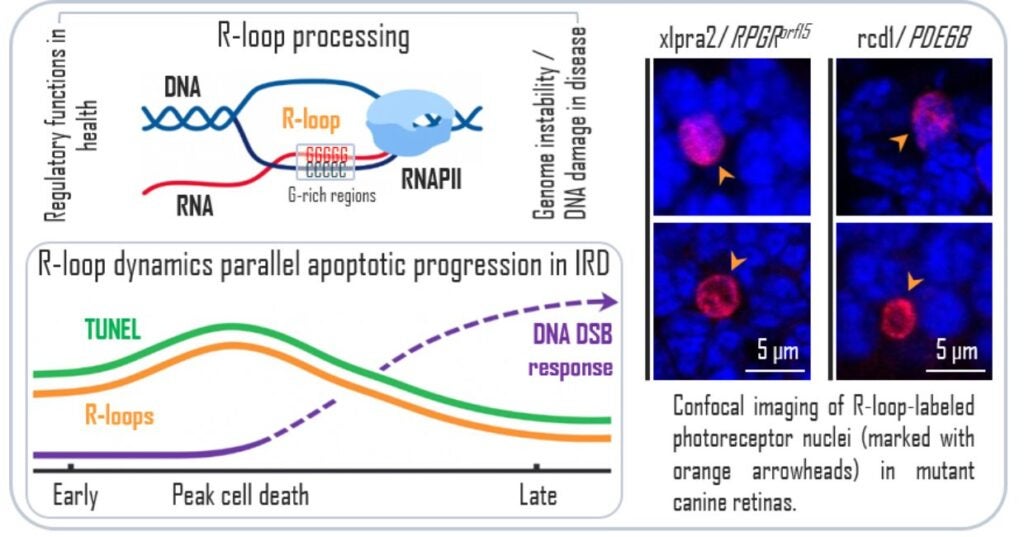
Penn Vet Researchers Uncover a Shared Cellular Stress Signal that May Drive Vision Loss in Retinitis Pigmentosa
Study finds buildup of unusual RNA-DNA loops in degenerating photoreceptors, pointing to a shared molecular stress pathway across distinct genetic forms of inherited blindness.

Interested in joining the Penn Vet Team?
View open positions to get a chance to join a collaborative environment.